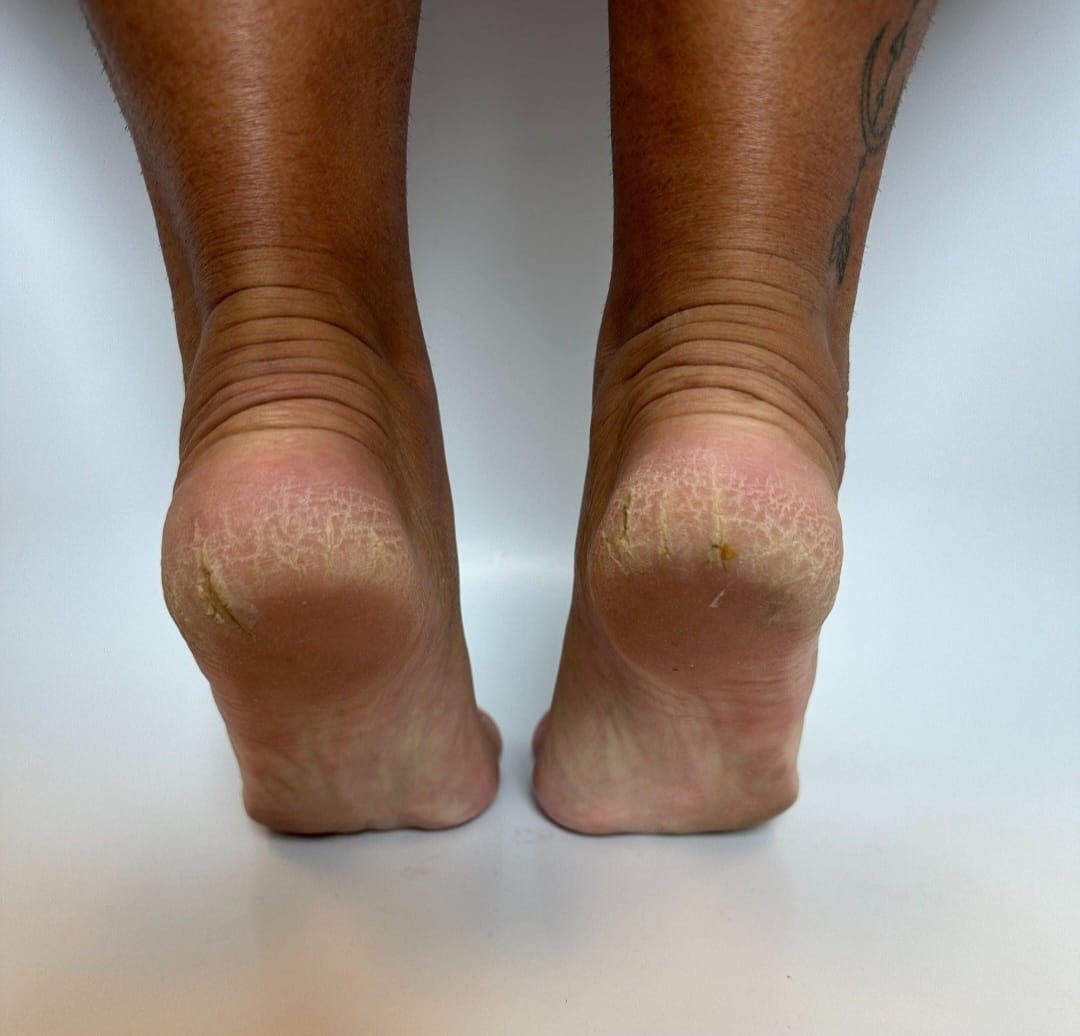
Cracked heels are one of the most common foot problems, affecting millions of people every year. While many people think they are only a cosmetic issue, cracked heels can become painful and even lead to serious complications if they are not treated properly. The condition usually begins with dry, rough skin around the edges of the heel. Over time, the skin loses its flexibility, and pressure from standing or walking causes it to split, creating visible cracks. In severe cases, these cracks may become deep enough to bleed, making everyday activities uncomfortable and increasing the risk of infection.
There are many reasons why heels become cracked. Dry skin is the most common cause, especially during cold weather or in hot, dry climates where the skin loses moisture more quickly. Standing for long periods on hard floors puts extra pressure on the heels, causing the skin to expand and eventually crack. Walking barefoot or wearing open-back sandals also exposes the feet to dry air and friction, making the problem worse. Aging is another factor because the skin naturally becomes thinner and less elastic over time. In addition, certain medical conditions such as diabetes, eczema, psoriasis, obesity, and thyroid disorders can make cracked heels more likely to develop.
The early signs of cracked heels are usually easy to recognize. The skin may appear dry, flaky, thick, or yellow around the heel. As the condition progresses, small lines begin to form in the skin. Without proper care, these lines deepen into painful cracks that may bleed. Some people also experience itching, burning, or discomfort while walking or standing.
Cracked Heels: Causes, Treatment, and Simple Ways to Keep Your Feet Healthy