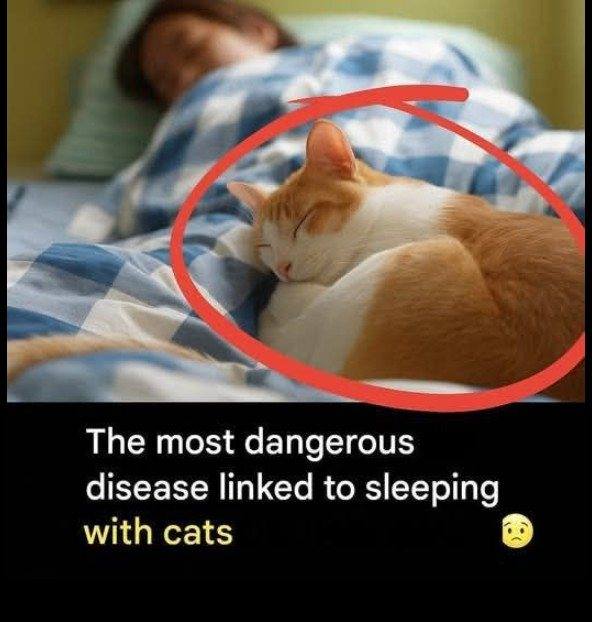
The Most Serious Illness from Sleeping with Cats: Prevention and Tips
Cats have been beloved companions to humans for thousands of years. They provide comfort, reduce stress, and often become cherished members of the family. For many cat owners, allowing a cat to sleep on the bed—or even under the covers—feels natural and emotionally comforting. The gentle purring, warmth, and sense of closeness can improve sleep and mental well-being.
However, as with any close interaction between humans and animals, there are health considerations to keep in mind. While most people sleep with their cats for years without any problems, there is one illness that stands out as the most serious potential risk associated with this habit: toxoplasmosis.
This does not mean you should fear your cat or give up cuddling altogether. Instead, understanding the illness, who is at risk, and how to prevent it allows you to enjoy your cat’s companionship safely and responsibly.
Understanding Zoonotic Diseases
Before focusing on toxoplasmosis, it’s important to understand a broader concept: zoonotic diseases.
Zoonotic diseases are illnesses that can be transmitted from animals to humans. Cats, like all animals, can carry certain bacteria, parasites, or fungi that may affect people under specific conditions. Most of these risks are low for healthy individuals, but they can increase with close, repeated contact—such as sleeping in the same bed.
Common cat-associated zoonotic conditions include:
Ringworm (a fungal skin infection)
Cat scratch disease
Intestinal parasites
Toxoplasmosis
Among these, toxoplasmosis is considered the most serious, particularly for pregnant individuals and people with weakened immune systems.
What Is Toxoplasmosis?
Toxoplasmosis is an infection caused by a microscopic parasite called Toxoplasma gondii. This parasite is extremely common worldwide and can infect many warm-blooded animals, including humans.
Cats play a unique role in the parasite’s life cycle. They are the primary host, meaning the parasite can reproduce in a cat’s intestines and be shed in the cat’s feces.
How Common Is It?
It is estimated that up to one-third of the global population has been exposed to Toxoplasma gondii at some point.
Most people who are infected never develop symptoms.
Many people do not even realize they have been exposed.
Despite its prevalence, toxoplasmosis can be serious under certain circumstances.
How Sleeping with Cats Can Increase Risk
Sleeping with a cat does not automatically cause toxoplasmosis. The risk depends on how exposure occurs.
Possible ways transmission may happen include:
Contact with microscopic parasite particles carried on a cat’s fur or paws
A cat that has recently used a litter box and then walks on bedding
Touching contaminated bedding and then touching your mouth, eyes, or food
It’s important to note:
Cats usually shed the parasite only for a short period in their lifetime
Indoor cats that do not hunt and eat raw meat are much less likely to be carriers
Still, close sleeping arrangements can slightly increase exposure risk, especially if hygiene practices are poor.
Symptoms of Toxoplasmosis
For most healthy people, toxoplasmosis causes mild or no symptoms. When symptoms do appear, they may resemble a mild flu.
Common Symptoms
Fatigue
Low-grade fever
Muscle aches
Swollen lymph nodes
Headache
These symptoms often resolve on their own without treatment.
Why Toxoplasmosis Can Be Serious
Although often mild, toxoplasmosis can become dangerous for certain groups of people.